Monster High Fangtastic Life
Budge StudiosRole Playing
4.5160.00 Reviews
- Version
- 2025.1.1
- Installs
- 1.00M
- Age Rating
- Everyone
Screenshots
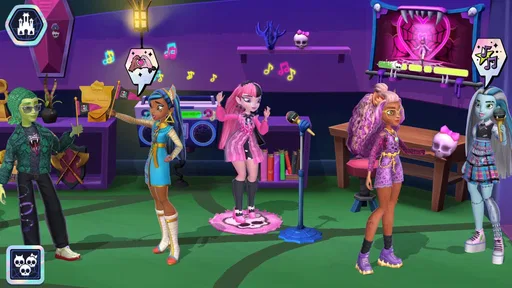
Our Review of Monster High Fangtastic Life
 Analysis by Appyee
I spent time with Monster High Fangtastic Life, a free role-playing game from Budge Studios built around an interactive dollhouse-style world. Its strongest idea is not a complicated quest system or a demanding battle loop. It is the freedom to move between frightful fashion, cooking and playful character interactions at a child-friendly pace. That makes it feel closer to a digital toy box than to a traditional role-playing adventure.
That distinction matters before you download it. If you want deep character statistics, a long story campaign or strategic combat, this is not the right kind of game. If you want a colorful space where a child can dress characters, experiment with everyday activities and invent small stories, it has a much clearer purpose. I found the experience easiest to enjoy when I treated each session as a short creative play period rather than expecting a goal-driven game with a definite ending.
Why the interactive dollhouse idea works
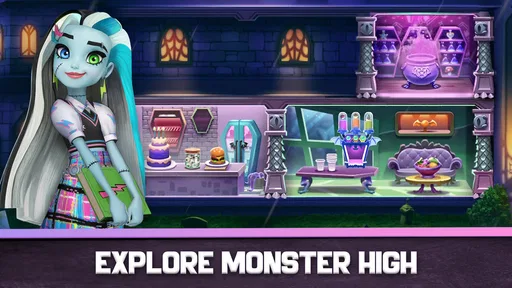
The verified store short description simply identifies it as Monster High, but the actual appeal comes from how the licensed world is used. The game presents familiar characters and themes through activities that are easy to understand without a tutorial-heavy learning curve. Clothing, food preparation and room-to-room play give children several ways to decide what happens next. That choice is the central capability, and it changes the experience from passively watching characters into actively arranging a little scene.
I especially liked that the activities can support different moods. A child can focus on creating an outfit, switch to cooking, or use the characters as the starting point for an improvised story. There is no need to finish one large objective before trying another type of interaction. This makes it suitable for short visits, such as a few minutes after school, as well as longer sessions when a child wants to keep reshaping the same imaginary world.
The role-playing label is therefore best understood in a broad, creative sense. The player is taking on roles and making choices inside the Monster High setting, but this is not the same as a numbers-driven role-playing game. I would compare it more closely with a digital dollhouse or dress-up playground than with a traditional fantasy RPG. That comparison helps set expectations honestly and explains why its simplicity is both its strength and its main limitation.
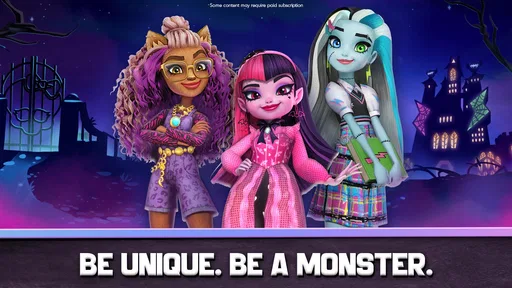
Its audience is also unusually clear. The game is rated Everyone, and the tone is designed to be accessible to children while still giving fans of Monster High a recognizable setting to explore. The developer, Budge Studios, has built the experience around approachable touch interactions rather than demanding controls. I could hand it to a young player without expecting them to understand complicated menus first, although an adult may still want to stay nearby when purchases become relevant.
Small choices create the best play
The most useful way to play is to give the child a simple prompt instead of asking, “What do you want to do?” That question can be too broad in an open-ended game. A better starting point is, “Can you make an outfit for a party?” or, “What meal would these characters prepare together?” The prompt gives the session direction while leaving the child in control of the details.
This approach also reveals a less obvious benefit: the game can encourage sequencing. Choosing a character, selecting a look, preparing food and then acting out the result creates a small chain of decisions. It is not an educational lesson in the formal sense, and I would not present it as one, but the open-ended structure naturally supports planning and storytelling when an adult joins in.
Another practical insight is that the game works better when the player accepts repetition. The pleasure is in trying a different combination or replaying a familiar activity with a new idea, not in constantly unlocking a new system. Children who enjoy arranging, pretending and revisiting favorite characters may find that repetition satisfying. Children who need frequent rewards or escalating challenges may lose interest much sooner.
How the activities feel during everyday play
In use, the experience is easy to approach because the main actions are familiar. Touch-based selection makes dressing and interacting feel natural on a phone or tablet, and the visual presentation does most of the explaining. I did not need to study a rulebook to understand the basic rhythm: choose something, see how it looks or behaves, and decide what to try next.
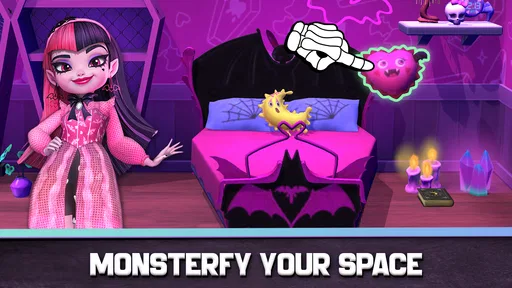
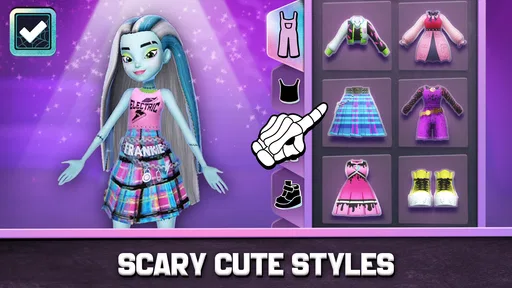
The fashion side is the most immediately accessible part. It gives a child a visible result, which is useful for players who like making choices and seeing them reflected on a character. The important detail is that clothing is not only a collection exercise. It can become a reason to invent an occasion, such as a celebration, a performance or a visit between characters. That imaginative step is where the feature becomes more valuable than a simple sequence of costume changes.
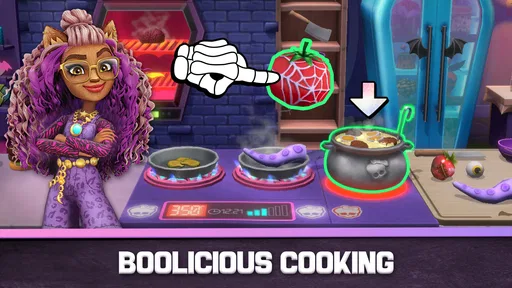
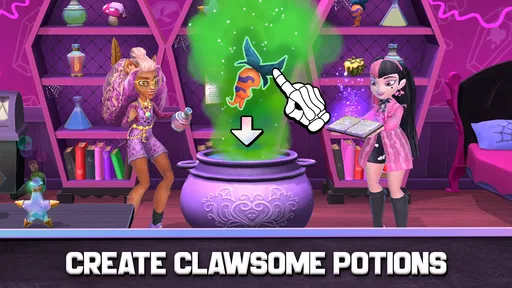
Cooking provides a different kind of interaction. Instead of concentrating only on appearance, it gives the player a practical activity to organize. I found it useful for breaking up a long dress-up session because it changes the pace and introduces a domestic, pretend-play element. The combination makes the world feel more lived in, even though the game remains light and playful rather than a serious cooking simulation.
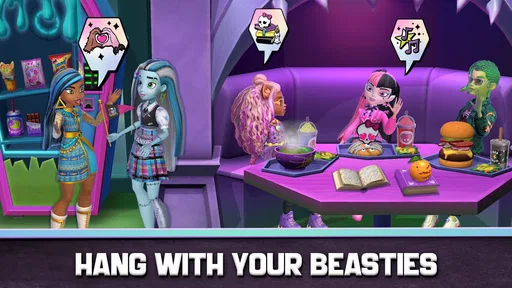
The character interactions tie those activities together. A costume can suggest a story, and a meal can give that story a setting. This is the capability I would emphasize to parents: the game lets children connect separate creative actions into one scene. A generic dress-up app might stop at appearance, while a basic cooking game might focus only on recipes. Here, the appeal is in moving between those ideas inside one Monster High-themed space.
There is also a useful difference between playing alone and playing with an adult. Alone, a child can make quick choices and repeat favorite actions without interruption. Together, an adult can turn the open structure into conversation: Why did this character choose that outfit? Who is cooking? What happens after everyone arrives? The game does not need to supply every story beat because the player can provide them.
A realistic after-school routine
Imagine a child coming home with only a short amount of free time before dinner. A large adventure game might be awkward because the player may not want to stop in the middle of a mission. This game fits that moment better. The child can choose a character, create a look, prepare a pretend meal and finish the scene without needing to remember a complex objective for the next session.
For a parent, that short-session structure is convenient, but it also requires boundaries. Open-ended play can quietly become longer than intended because there is no obvious “you are finished” screen. I would set the time before starting and give the child a final task, such as completing the current outfit or ending the cooking scene, rather than interrupting at random. That makes stopping feel like part of the play instead of an external punishment.
On a tablet, the larger display should make shared play more comfortable than on a small phone, particularly when two people are looking at the same character or comparing clothing choices. On a phone, the game is more suitable for individual play and short bursts. I would choose the device based less on performance expectations and more on whether the child will play independently or with someone sitting beside them.
Where the free model changes the experience
The game is free to start, which removes the biggest barrier for families who want to see whether this style of play suits their child. It also carries in-app purchases listed at $9.99 per item. That price point makes purchase awareness important, especially because children may interpret an appealing locked item as something they can simply tap to receive.
I recommend setting a clear rule before the first session: free activities are for experimenting, and anything that asks for a purchase requires an adult decision. This is not merely a general device-safety suggestion. In an open-ended fashion and dollhouse game, the desire to complete a look or continue a preferred activity can make optional content feel more urgent than it really is. A child may not distinguish between “part of the game” and “extra content” without help.
The free entry is most useful when treated as a trial of the core play style. Spend time checking whether the child enjoys creating scenes, not just whether they recognize Monster High characters. If the child quickly asks for a more competitive challenge, a longer narrative or a more complex progression system, paying for additional content would not solve the underlying mismatch. The issue would be the game’s design, not the amount of available material.
Another tradeoff is the lack of pressure. That sounds positive, and for many younger players it is. There is less risk of frustration from difficult controls or punishing failure, and the child can explore at their own speed. But players who enjoy clear achievements, tactical choices or a strong sense of advancement may experience the same calm structure as a lack of depth.
The current version is 2025.1.1, and the game runs on Android 5.1 or later. Those details make it approachable for people using older compatible Android devices, although the actual comfort of play still depends on screen size and how easily the child can handle touch controls. I would check the device before a trip or a planned family activity rather than assuming every older phone will provide an equally pleasant experience.
What it does better than usual alternatives
Compared with a conventional role-playing game, this one is much easier to enter and pause. There are no complicated character builds to maintain in the experience I reviewed, and the focus stays on immediate creative choices. Compared with a pure dress-up title, it offers more reasons to move beyond appearance by adding cooking and character-centered pretend play.
Compared with a structured cooking game, it is less concerned with precision and more interested in the surrounding story. That makes it a better fit for a child who wants to decide who is cooking and why, rather than someone who wants a detailed recipe challenge. Compared with a linear animated game, it gives the player more ownership of the scene, but it also provides less narrative direction.
This is why I would not call it a universal recommendation for every Monster High fan. A fan who mainly wants to collect, customize and invent stories will probably understand its appeal quickly. A fan who wants a demanding adventure starring the same characters may find the experience too gentle. The license attracts attention, but the open-ended activity design determines whether the game remains enjoyable.
Who gets the most from Fangtastic Life
The best audience is children who already enjoy dolls, outfit creation, pretend cooking and making up conversations between characters. It is also a good choice for parents looking for a game that can become a shared activity rather than a solitary challenge. The Everyone rating supports its broad accessibility, while the Monster High setting gives fans a familiar visual hook.
It may also suit a child who becomes discouraged by failure in action games. Because the emphasis is on arranging and experimenting, the player can try another idea without feeling that a mistake has ruined a level. That makes it a gentler option for quiet play, travel or a short break when the goal is relaxation rather than competition.
I would skip it if the intended player expects online competition, complex combat, deep progression or a long campaign. I would also be cautious about choosing it for a child who becomes upset when optional items are visible but unavailable. In that case, the free starting point may create more friction than value unless an adult is prepared to manage purchases and explain the boundaries clearly.
The game has already reached over a million installs and holds a 4.5 average from around fifteen thousand ratings, with roughly one hundred sixty written reviews. Those figures suggest that the approachable format has found a substantial audience, but they should not replace a look at the actual play style. Popularity cannot turn a dollhouse game into an adventure RPG, and the right decision still depends on what the child wants to do.
My recommendation after playing
I recommend Monster High Fangtastic Life when the goal is creative, character-led play rather than challenge-led progression. Its best capability is the way fashion, cooking and interaction can be joined into one invented scene. That connection gives the game more substance than a simple costume picker, while keeping the controls friendly enough for younger players.
I would begin with the free version, play alongside the child once, and watch what they choose without directing every action. If they naturally create stories and return to change details, the game is doing exactly what it is designed to do. If they immediately search for battles, missions or measurable rewards, I would choose a different role-playing game instead.
My final view is positive but specific: this is a digital Monster High playset, not a deep RPG. Its calm pace, accessible activities and flexible storytelling are genuine strengths, especially for short family sessions. The purchase model and open-ended structure deserve adult guidance, and the limited challenge will not satisfy everyone. For the right player, though, the freedom to create a character’s look, prepare a scene and decide what happens next is the reason to keep it installed.
Verdict
Strengths of Monster High Fangtastic Life
- Colorful Monster High visuals appeal to younger fans.
- Simple controls make the game easy for children to learn.
- Character customization encourages creativity and personal expression.
- Short activities are suitable for quick play sessions.
- Familiar characters add extra appeal for fans of the franchise.
Limitations of Monster High Fangtastic Life
- Progress can feel repetitive after the first few play sessions.
- Some content may be locked behind in-app purchases.
- The game may require a stable internet connection for certain features.
- Limited challenge could disappoint older players.
- Parents should review privacy and purchase settings before handing over the device.
Other Releases by Budge Studios
View All
Hello Kitty Nail Salon
Casual4.5

Barbie Dreamhouse Adventures
Simulation4.2

Thomas & Friends: Go Go Thomas
Racing4.4

Hot Wheels Unlimited
Racing4.5
Similar Picks in This Category
View All
Hair Dye
CrazyLabs LTD4.4

Monster High™ Beauty Salon
CrazyLabs LTD4.5

Bus Simulator - Bus Games 3D
Jima Apps4.4

Flight Pilot: 3D Simulator
Wildlife Studios4.1


Super Stylist Fashion Makeover
CrazyLabs LTD4.4
Frequently Asked Questions
What is Monster High Fangtastic Life?
Monster High Fangtastic Life is a casual mobile game inspired by the Monster High universe. It lets players explore a colorful school environment, interact with familiar characters, customize their appearance, complete activities, and take part in playful story-driven experiences. The game is designed mainly for younger players and fans of the franchise, with simple controls and an emphasis on creativity, collecting, and exploration rather than difficult combat.
Is Monster High Fangtastic Life free to download and play?
The game can generally be downloaded without an upfront purchase, but availability and pricing may vary depending on whether you use Android or iOS. Some content may be unlocked through optional in-app purchases, including cosmetic items, extra activities, or additional areas. Parents should review the store listing and device settings carefully, because purchases may be available even though the initial download is free.
Does Monster High Fangtastic Life require an internet connection?
An internet connection may be needed for the initial download, updates, account-related features, advertisements, or restoring purchases. Some basic activities can potentially be accessed offline, but the complete experience may not be available without connectivity. If you plan to let a child play while traveling, it is best to launch the game beforehand and check which locations and features continue working without Wi-Fi or mobile data.
Is Monster High Fangtastic Life suitable for children?
Monster High Fangtastic Life is aimed primarily at children and fans of the Monster High brand, offering cartoon-style visuals, friendly characters, and straightforward gameplay. However, parents should still check the age rating in their region and review advertising, chat, data collection, and in-app purchase options. Enabling parental controls is recommended, particularly on shared devices or when younger children play independently.
Which devices support Monster High Fangtastic Life?
Monster High Fangtastic Life is intended for compatible Android and iOS mobile devices, but exact requirements can change as the game receives updates. Before downloading, check the official store page for the supported operating-system version, available storage, and device compatibility. Older phones or tablets may experience slower loading, reduced performance, or installation problems even when the game appears in search results.
Play our best games!


